The digital revolution has changed how communities communicate, organize, and participate in public life. Across Cameroon, digital platforms have become important spaces for young people, women leaders, peacebuilders, activists, and community organizations to share information, mobilize communities, and advocate for change.
For women and girls living in conflict-affected communities, however, the digital space is not always a space of empowerment. Increasingly, it can become another place where gender-based violence occurs.
Technology-Facilitated Gender-Based Violence (TFGBV) including online harassment, threats, cyberstalking, impersonation, digital surveillance, and the misuse of private information is creating new barriers that prevent women and girls from participating fully in civic life.
While humanitarian responses have increasingly recognized physical, sexual, and psychological forms of gender-based violence, the digital dimensions of violence remain largely undocumented in Cameroon. This gap makes it difficult to fully understand the experiences of women and girls whose online participation is affected by abuse, intimidation, and fear.
Cameroon’s Humanitarian Reality: Women and Girls Facing Increased Protection Risks
The need to address violence against women and girls in Cameroon is urgent.
According to UNFPA Cameroon, gender-based violence remains a significant human rights and protection concern, with more than half of married women in Cameroon experiencing intimate partner violence, including 34% experiencing physical violence and 13% experiencing sexual violence. The ongoing crises in the North-West and South-West regions have further increased risks for women and girls by limiting access to protection services, justice mechanisms, and safe spaces.
The humanitarian situation has also created conditions where women and girls face increased vulnerability due to displacement, insecurity, and reduced access to essential services. UNFPA reported that approximately 970,000 people were internally displaced in Cameroon, with displacement increasing women and girls’ exposure to gender-based violence and other protection risks.
In these contexts, digital platforms have become both a lifeline and a risk environment. Women use technology to access information, seek support, organize communities, and participate in peacebuilding efforts. However, when these platforms become unsafe, women’s ability to engage publicly is threatened.
How Technology-Facilitated Violence Limits Women’s Civic Participation
1. Digital Violence Forces Women Into Silence
Civic participation requires people to express opinions, organize, and contribute to decisions affecting their communities.
However, when women and girls experience online harassment or threats, many reduce their online presence, avoid public discussions, or withdraw from advocacy spaces completely.
For a young woman advocating for peace in the South-West Region, a female community leader mobilizing women for dialogue, or a girl speaking about rights and equality, online abuse can become a warning that public participation comes with personal risks.
The result is self-censorship where women silence themselves not because they lack ideas, but because they fear the consequences of being visible.
2. TFGBV Creates Barriers to Women’s Leadership
Women’s participation is essential to democratic governance and peacebuilding. Yet, women leaders and activists often face gender-based attacks when they participate in public conversations.
Digital spaces can amplify harmful stereotypes, misinformation, and personal attacks designed to undermine women’s credibility.
When women are pushed away from online civic spaces, communities lose valuable perspectives needed for inclusive decision-making.
3. Conflict-Affected Women Face Multiple Layers of Exclusion
Women and girls affected by conflict already experience barriers linked to insecurity, displacement, poverty, and limited access to services.
Digital violence adds another layer.
A displaced adolescent girl may use a phone to access information about services but may also face online exploitation or harassment. A woman peacebuilder may use social media to mobilize communities but become targeted because of her advocacy.
Without digital safety measures, technology risks reproducing the same inequalities women face offline.
The Missing Conversation: Digital Safety as a Humanitarian Protection Issue
Humanitarian actors in Cameroon have made significant efforts to strengthen GBV prevention and response. In 2025, UNFPA-supported interventions reached thousands of people with GBV prevention, mitigation, and response activities, including women and girls affected by crisis.
However, as technology becomes increasingly central to communication and civic engagement, digital safety must become part of humanitarian protection approaches.
Women and girls need more than access to technology. They need safe access.
This requires:
- Digital safety education for women, girls, and communities.
- Survivor-centered reporting and referral mechanisms for online violence.
- Better documentation of TFGBV within humanitarian data systems.
- Stronger collaboration between technology actors, civil society organizations, and protection actors.
- Technology solutions designed with privacy, safety, and inclusion at the center.
Protecting Women’s Digital Voices Protects Democracy
The future of civic participation in Cameroon will increasingly include digital spaces. If women and girls cannot participate safely online, they cannot participate equally in society.
Digital violence is not only a technology issue. It is a human rights issue, a gender equality issue, and a democracy issue.
Women and girls must be able to use their voices online and offline without fear.
Because when women participate safely, communities become stronger, peacebuilding becomes more inclusive, and democracy becomes more meaningful.
LEAD CHILD AFRICACONTACT USCREATING OPPORTUNITIES FOR YOUNG PEOPLEDONATENURTURING LEADERS AND SHAPING FUTURESJOIN USTOGETHER FOR EVERY CHILDDONATE
Previous slide
Next slide
PROMOTING GROWTH
Help us unlock their Potentials and promote growth!
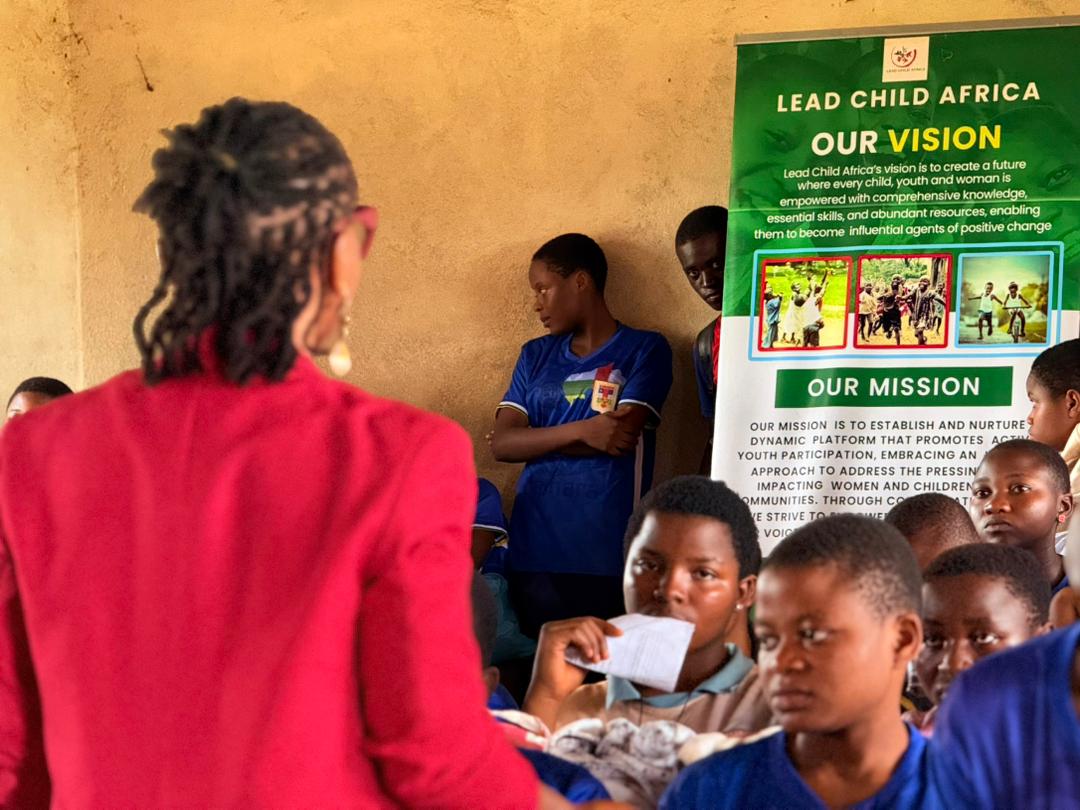
PROTECTING DREAMS
Join us in providing opportunities to turn dreams into reality

BUILDING STRONG FOUNDATIONS
Laying the Groundwork for success, for every child’s future.
One child, One strong foundation at a time.
WHO WE ARE
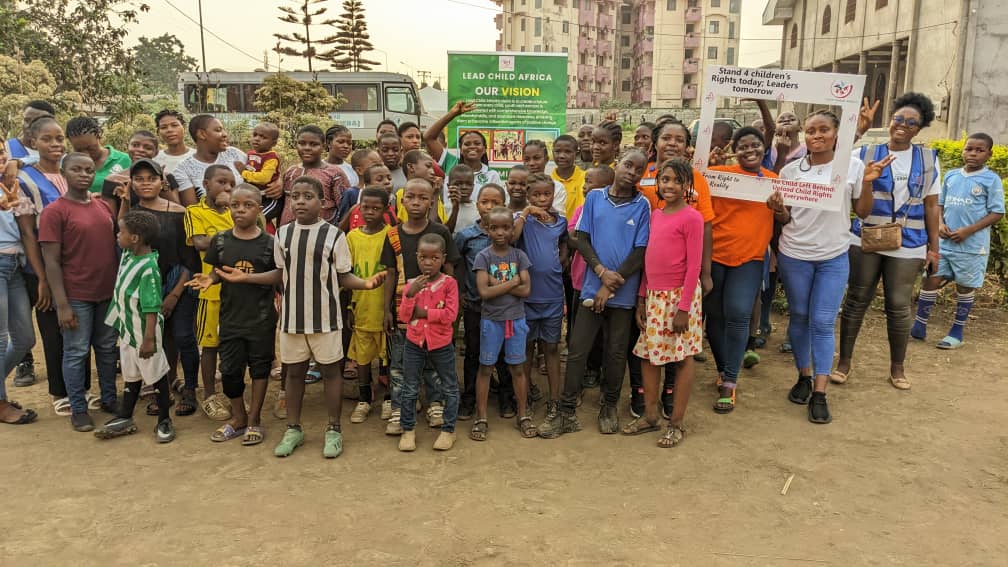
LEAD CHILD AFRICA with its Tag ”CATCHING THEM YOUNG” is an initiative dedicated to understanding and respecting the diverse cultures of Cameroon and Africa, with a special focus on improving the lives of children. We acknowledge the variety of languages and ethnic groups in Cameroon and integrate traditional values into our programs to create a safe and nurturing environment for children.
Our organization focuses on engaging communities in ways that are meaningful to them, ensuring that children’s needs are prioritized. By fostering a sense of ownership and participation among the people we work with, we create programs that resonate with local contexts. This approach ensures that our initiatives are respectful, relevant, and effective, addressing the unique needs of each community and helping children across Africa thrive.
OUR EVENTS
We Strive To Make the Experience Fun

Give the African Child and opportunity to Dream
Empower dreams – your contribution helps provide essential opportunities for children

GIVE EVERY CHILD A CHANCE – INVEST IN THEIR EDUCATION TODAY!
Support us as we make learning fun-filled for Children everywhere. Give every child a chance-invest in their education and watch them achieve their dreams.

HELP SHAPE FUTURES – SPONSOR A CHILD’S EDUCATION
Support us in providing valuable learning through Learning circles and fun-filled activities for thriving children
OUR OBJECTIVES
Our Objective is to empower and uplift children in Africa. The initiative aims to promote and protect the rights of children, by providing comprehensive access to education, healthcare, and essential support services for at least 80% of identified vulnerable children facing challenges such as poverty and exploitation, harassment, violence etc. Additionally, Lead Child Africa seeks to engage and motivate at least 70% of the target population and the public to actively participate in environmental protection and improvement initiatives, fostering a culture of environmental stewardship within communities.
Our Areas of Operations
– Education and Skill Development
0%
– Recreational and Cultural Activities
0%
– Community Outreach and Awareness
0%
– Advocacy and Legal Support
0%
– Child/Environmental Protection Programs
0%
Know More
OUR BLOG
Latest News & Update.

Using Film as a Transformative Tool to Combat Sexual and Gender-Based Violence in Schools – Lycee Bolifamba Mile 16, Buea
16 DAYS OF ACTIVISM AGAINST GENDER BASED VIOLENCE: Taking a Stand Together
WORLD CHILDREN’S DAY 2024
INTERNATIONAL DAY OF THE GIRL CHILD(Oct 11th 2024)
BACK 2 SCHOOL DRIVE 2024
Our Partners


VIEW OUR MESTRUAL HYGIENE CAMPAIGN IN MISELELE, TIKO SUB DIVISION, CAMEROON.
Our mission is to ensure that all young girls are able to make informed decisions about their bodies through SRHR education
-
CREATING OPPORTUNITIES FOR YOUNG PEOPLE
REPRESENTING YOUTH VOICES
-
CATCH THEM YOUNG
EMPOWERING FUTURES..
-
SENSITZATION AND ADVOCACY
INVOLVING THE COMMUNITY IS PARAMOUNT.
TOGETHER, LET’S RAISE OUR VOICES FOR SUSTAINABLE CHANGE
-
Transforming Education
CREATING OPPORTUNITIES
REPRESENTING YOUTH VOICES ON ALL PLATFORMS TO ENSURE THAT WE ARE ABLE TO ADVOCATE FOR MORE OPPORTUNITIES FOR YOUNG PEOPLE IN AFRICA.
-
NUTURING LEADERS, SHAPING FUTURES
-
TOGETHER FOR EVERY CHILD
Children today, leaders tomorrow!!


-
INVOLVING THE COMMUNITY IS PARAMOUNT.
TOGETHER, LET’S RAISE OUR VOICES FOR SUSTAINABLE CHANGE
-
REPRESENTING YOUTH VOICES ON ALL PLATFORMS TO ENSURE THAT WE ARE ABLE TO ADVOCATE FOR MORE OPPORTUNITIES FOR YOUNG PEOPLE IN AFRICA.
-
Children today, leaders tomorrow!!
CHERISHING CHILDHOOD 2025
- LCA
- SATURDAY, FEB 15TH, 2025 AT 4:00 PM
-
BUEA, CAMEROON
Days Hours Minutes Seconds
Become A Volunteer